
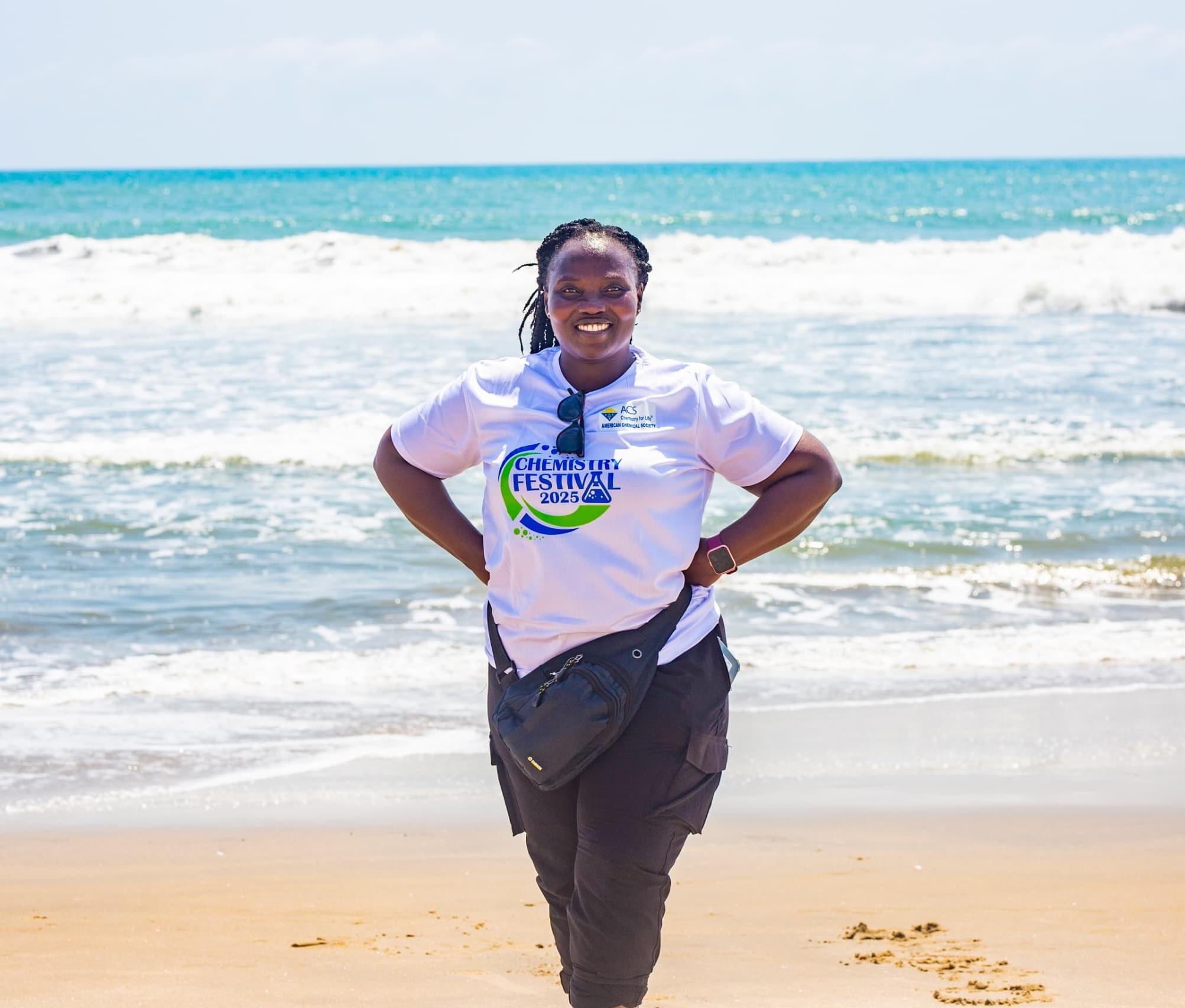
Dr. Charity Esenam Anor reflects on her pathway into STEM education, beginning with her enrolment in the general science programme in Senior High School, the “entry point to any science field” in Ghana. She explains that she wanted to “experience science” rather than learn it only through theory, which motivated her to pursue teacher training and later a degree in science education, majoring in chemistry and minoring in biology. Her interest in environmental issues led her to a Master’s degree in Environmental Science, followed by a PhD in Science Education (Chemistry).
She describes significant challenges in accessing education, noting that she comes “from a very poor background” and relied on perseverance, teacher support, and a Carnegie scholarship to continue her studies. She later funded her postgraduate degrees through work, with additional support from her husband and an ERASMUS+ fellowship in Finland, which she describes as “great exposure” that strengthened her research into contextualised chemistry teaching.
Dr. Anor highlights her Chemistry Festival, themed “Unmasking the Chemistry in Indigenous Activities,” which used local practices such as palm‑wine distillation and cassava processing to teach scientific concepts. She notes that after the festival, “majority of them expressed an interest in pursuing science.”
Addressing gender stereotyping in Ghana, she explains that “society is not open to push you into it, you have to convince them that you can do it.” Her message to young women is direct: “Girls can do science as equally as the boys… with perseverance and determination, they can overcome any obstacle.”